
Why a Good State of Mind Trumps Prediction in Trading
The Best Trade You Ever Missed
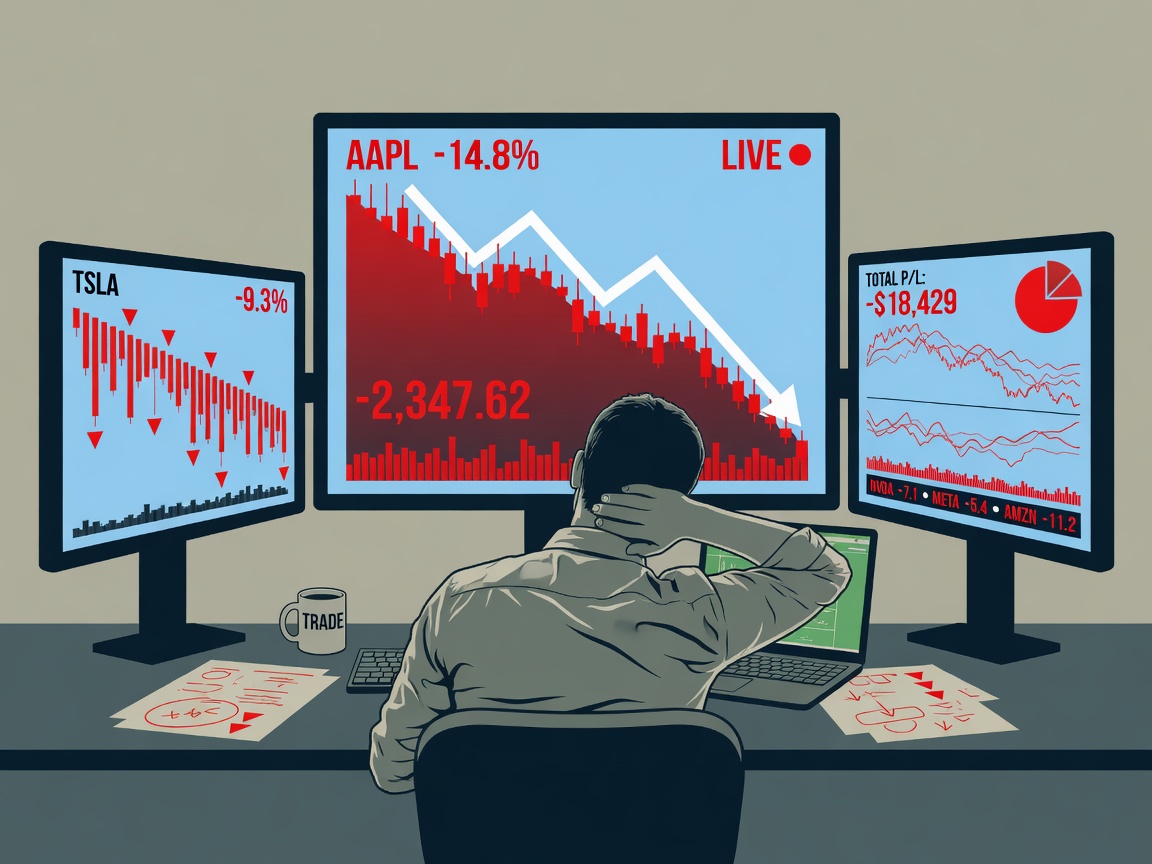
Imagine a perfect setup. The trend is clear, the levels are marked, and every condition in your plan lines up. You enter with confidence, only to watch the trade fail almost immediately. The stop is hit, the chart reverses, and a trade that looked like an opportunity becomes a loss.
The loss itself is rarely the most damaging part. What follows is the psychological unraveling: you move the next stop because you do not want to be wrong again, take a revenge trade to recover the money, and eventually abandon the plan that was supposed to protect you. A single failed idea becomes a story about your ability, and that story begins driving your decisions.
The Invisible Opponents
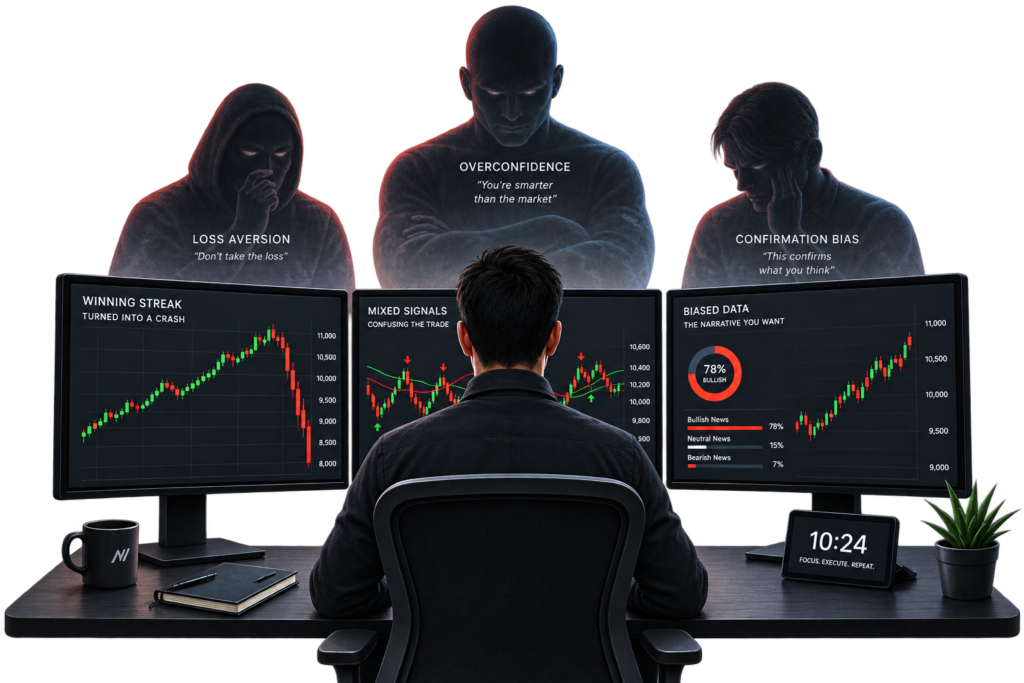
Trading decisions are shaped by mental shortcuts as much as by charts. Loss aversion, described in Kahneman and Tversky’s prospect theory, makes the pain of a loss feel greater than the pleasure of an equivalent gain. Rather than accepting a controlled loss, traders begin negotiating with the market: stops are moved, positions are held too long, and discipline is replaced by hope. Ironically, many catastrophic losses begin as small losses that simply were not accepted in time.
Overconfidence: The Most Dangerous Winning Streak. A run of successful trades can be just as destabilizing as a losing streak. As the account grows, analysis appears flawless, position sizes increase, risk management feels less important, and rules that once seemed essential begin to feel restrictive. Then the market changes. The next losing trade is larger than intended, the one after that is worse, and weeks of gains can disappear in a few sessions because confidence has quietly turned into a belief in invincibility.
Confirmation bias makes traders search for evidence that supports a preferred position while discounting contradictory information. Anchoring keeps attention fixed on an entry price, an old forecast, or a familiar level even after new information changes the situation. Barber and Odean’s research on individual investors illustrates how frequent, confident trading can undermine returns; activity driven by certainty is not the same as an edge.
Building a Framework for Consistent Execution
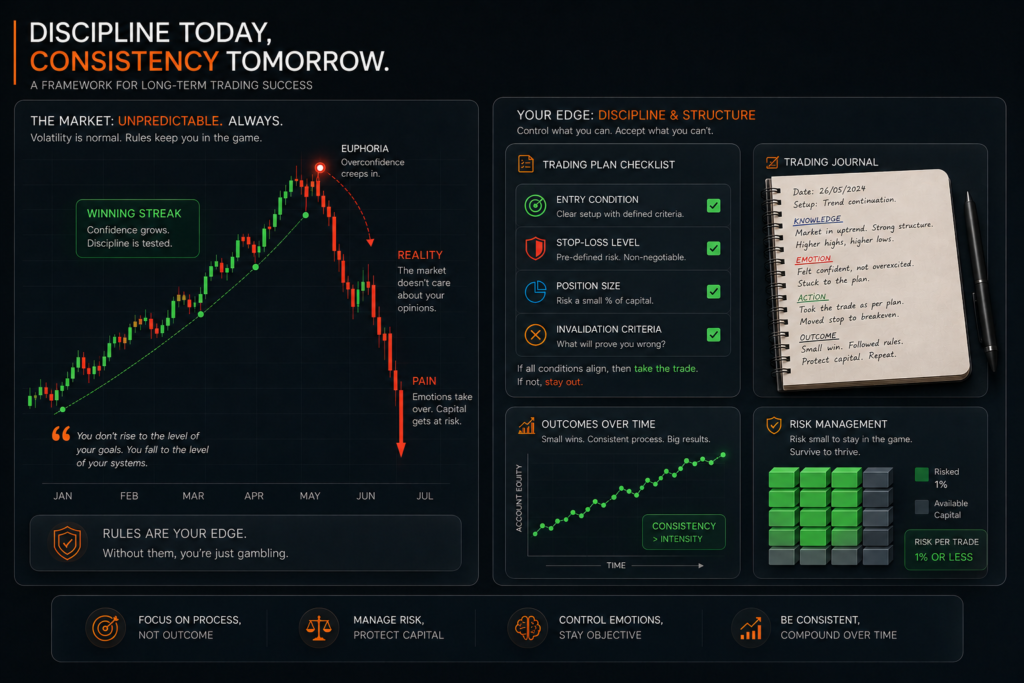
The solution is structure, not a heroic act of willpower. Before entering, define the entry condition, stop-loss, position size, and criteria that would invalidate the idea. If those decisions are made while the trade is already moving, emotion gets a vote at precisely the wrong moment. A written framework turns an uncertain outcome into a known process.
Discipline during the trade means allowing the plan to work without demanding that every position be profitable. Review execution rather than judging yourself by one result. Keep risk small enough that a normal loss does not threaten your identity or your account, and use a journal to record what you knew, felt, and did. Over time, consistency comes from repeating sound decisions across a series of outcomes.

Conclusion: The Real Edge
The real edge in trading is not the ability to predict every move. It is the ability to recognize the biases that distort decisions and build a system that limits their influence. A good state of mind does not mean feeling calm all the time; it means having enough awareness and structure to follow a sound process when fear, greed, or certainty becomes loud.
Prediction may open the door to a trade, but execution determines whether the opportunity becomes a durable practice. When your risk is defined, your assumptions are testable, and your response to uncertainty is planned, you no longer need to be right on every position. You need to remain capable of making the next good decision.
- Kahneman, D., & Tversky, A. (1979). Prospect theory: An analysis of decision under risk. Econometrica, 47(2), 263–291.
- Kahneman, D. (2011). Thinking, fast and slow. Farrar, Straus and Giroux.
- Barber, B. M., & Odean, T. (2000). Trading is hazardous to your wealth: The common stock investment performance of individual investors. The Journal of Finance, 55(2), 773–806.
- Steenbarger, B. N. (2015). Trading psychology 2.0: From best practices to best processes. Wiley.
- Thaler, R. H. (2015). Misbehaving: The making of behavioral economics. W. W. Norton & Company.